top of page

Fan Letter
팬레터
Official English Title


Posters included in this archive are embedded solely for documentary and educational purposes.
🔗 All images are linked to their original sources or articles. No copyright ownership is claimed.
SOURCE
literary history
SETTING
Korea
BOOK
original
Secret letters among 1930s Korean writers
Korean Premiere
2016
Korean Premiere Theatre
Lee Hae-rang Theatre, Dongguk University, Seoul
Further Korean run reference:
https://namu.wiki/w/%ED%8C%AC%EB%A0%88%ED%84%B0(%EB%AE%A4%EC%A7%80%EC%BB%AC)
The Musical search cue — “팬레터 뮤지컬”
Summary
In 1930s Gyeongseong, a young writer’s secret admiration and fictional identity draw authors into a web of letters, artistic longing, deception, and devotion.
Origin & Development
Premiered in Korea in 2016, produced by LIVE Corp, Fan Letter originated from a government-backed creator development program. Inspired by episodes surrounding writers Yi Sang and Kim Yu-jeong and the literary circle of the era, the show reframes that milieu through fictionalized figures and a correspondence-driven narrative. Subsequent domestic runs followed in 2017–2018, 2019–2020, 2021–2022, and a fifth season scheduled for 2025–2026, solidifying its status as a contemporary Korean original.
Korea (2016 premiere; LIVE Corp) — Initial run opened in October–November 2016, with extended revivals in 2017–2018, 2019–2020, and 2021–2022; a fifth season is slated for December 2025–February 2026. Across these cycles the work refined its book and performance language while retaining its epistolary core and 1930s setting.
Full Synopsis
In 1930s Gyeongseong under Japanese colonial rule, Sehoon visits the imprisoned novelist Lee Yoon in Japan. A novel attributed to Hikaru—a supposedly deceased female writer and the lover of the late author Haejin—is about to be published, and Sehoon fears that the author’s identity will be exposed. Lee Yoon claims to possess Haejin’s final letter to Hikaru and demands the truth.
Years earlier, Sehoon had run away from home and found shelter with the League of Seven, a literary circle of young writers preparing a Korean-language magazine. Despite its name, the group had never gathered seven members. Sehoon became their assistant and admired Haejin, a talented writer suffering from tuberculosis.
Haejin drew inspiration from letters sent by a woman named Hikaru. In reality, Sehoon had created Hikaru and written the letters himself. What began as encouragement gradually became a separate voice within him—bolder and more demanding than Sehoon could be. Through Hikaru, he pressed Haejin to continue writing even as his illness worsened.
After the authorities investigated the group’s Korean-language writings, its members burned manuscripts and disbanded. Haejin nevertheless resumed writing after receiving another manuscript from Hikaru. Unable to watch him sacrifice his health, Sehoon finally confessed that Hikaru did not exist. Haejin implied that he had already understood the truth but wished Sehoon had preserved the illusion. Before dying, he wrote that the letters had given him love, language, and a reason to live.
Back in prison, Lee Yoon reveals that the supposed final letter was a trick intended to force Sehoon’s confession. He tells Sehoon that he is a genuine writer and must continue writing. Lee Yoon dies soon afterward.
Sehoon completes Haejin’s novel and is formally welcomed into the League of Seven. At the publication gathering, he delivers Haejin’s eulogy and accepts Hikaru as part of himself. In a symbolic reunion, Haejin, Hikaru, Lee Yoon, and the surviving writers finally complete the group’s long-imagined seven members.
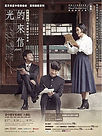
光的來信
2018
2018-08-17
to
2018-08-19
Country:
Taiwan
City:
Taichung
Production Type:
Licensed

Language:
Chinese
Venue:
National Taichung Theater
Marketed as the work's first overseas engagement, this short premiere run introduced its letter-form narrative and 1930s literary setting to Taiwanese audiences.

粉丝来信
2018
2018-10-09
to
2018-10-10
Country:
China
City:
Shanghai
Production Type:
Reading / Showcase

Language:
Korean
Venue:
Shanghai Culture Square
One of six titles presented in excerpt form at the K-Musical Roadshow, a promotional event supported by the Korea Arts Management Service and attended by Chinese producers and press, positioning the musical for future licensing and market testing.

粉丝来信
2022
2022-01-13
to
2022-01-16
Country:
China
City:
Shanghai
Production Type:
Licensed
Language:
Chinese
Venue:
Shanghai Culture Square
Presented with a local creative team and cast, the production emphasized the musical's themes of artistic longing and authorship while retaining the structure and tone of the Korean original.

ファンレター
2024
2024-09-09
to
2024-10-06
Country:
Japan
City:
Multiple Cities
Production Type:
Licensed
Language:
Japanese
Venue:
Multiple Venues
Produced by Toho, directed by Tamiya Kuriyama, and starring Naoto Kaiho, Kenji Urai, and Haruka Kinoshita, the production was based directly on the script and score of the 2021–2022 Korean production, preserving the historical context and character names.
It played Theatre Crea in Tokyo (September 9–30, 2024) and Hyogo Performing Arts Center (October 4–6, 2024).

Fan Letter
2024
2024-11-04
to
2024-11-04
Country:
United Kingdom
City:
London
Production Type:
Reading / Showcase
Language:
English
Venue:
Lilian Baylis Studio
An English-language highlights presentation of about 40 minutes as part of the K-Musical Roadshow, framed as an export-ready introduction and the title's first step into the UK market.
bottom of page